Complete Soft Starter Selection Guide: From Parameters to Applications

Engineer Luo
Low-Voltage Equipment Technical Advisor10 years of experience as a low-voltage equipment technical advisor, specializing in the selection and application of motor control devices such as soft starters and VFDs, having served over 200 industrial projects.
Soft starter selection is one of the most overlooked yet unforgiving aspects of industrial electrical design. Undersize it, and the motor fails to start or trips repeatedly; oversize it, and you waste money while losing protection sensitivity; choose the wrong type, and you risk shortening equipment life or even causing safety incidents. Drawing from real-world engineering experience, this article walks you through every critical step of soft starter selection, helping you avoid 90% of common mistakes. If you need quick selection results, you can use our Soft Starter Intelligent Selection Calculator to get precise model recommendations by simply entering motor parameters.
I. Three Core Parameters You Must Know Before Selection
1.1 Motor Rated Power — The Starting Point
Motor rated power is the most fundamental basis for soft starter selection. The soft starter’s rated power must be greater than or equal to the motor’s rated power, with appropriate margins based on load type.
- Light-load starting (fans, water pumps): Soft starter power ≥ motor power, no additional upsizing needed
- Medium-load starting (compressors, conveyors): Upsize soft starter by 1~2 power ratings
- Heavy-load starting (crushers, ball mills): Upsize soft starter by 2~3 power ratings, or choose a heavy-duty model
⚠️ Common Pitfall: Many engineers habitually upsize the soft starter by one rating “just in case.” However, for light loads, excessive upsizing actually reduces overload protection sensitivity, making it impossible to effectively protect the motor.
1.2 Motor Rated Voltage — Determines the Product Series
Motor rated voltage directly determines which soft starter product series to choose:
| Voltage Level | Applicable Product Series | Typical Applications |
|---|---|---|
| 380V | Low-voltage soft starters | Factory distribution, pump rooms, HVAC systems |
| 660V | Low-voltage soft starters (special specs) | Mines, metallurgy |
| 3kV/6kV/10kV | High-voltage solid-state soft starter cabinets | Large pump stations, mine main fans, cement mills |
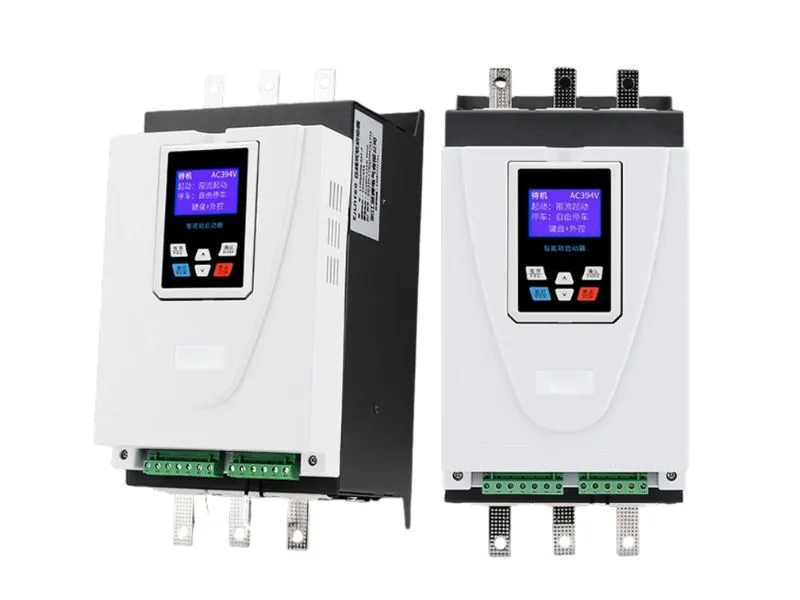
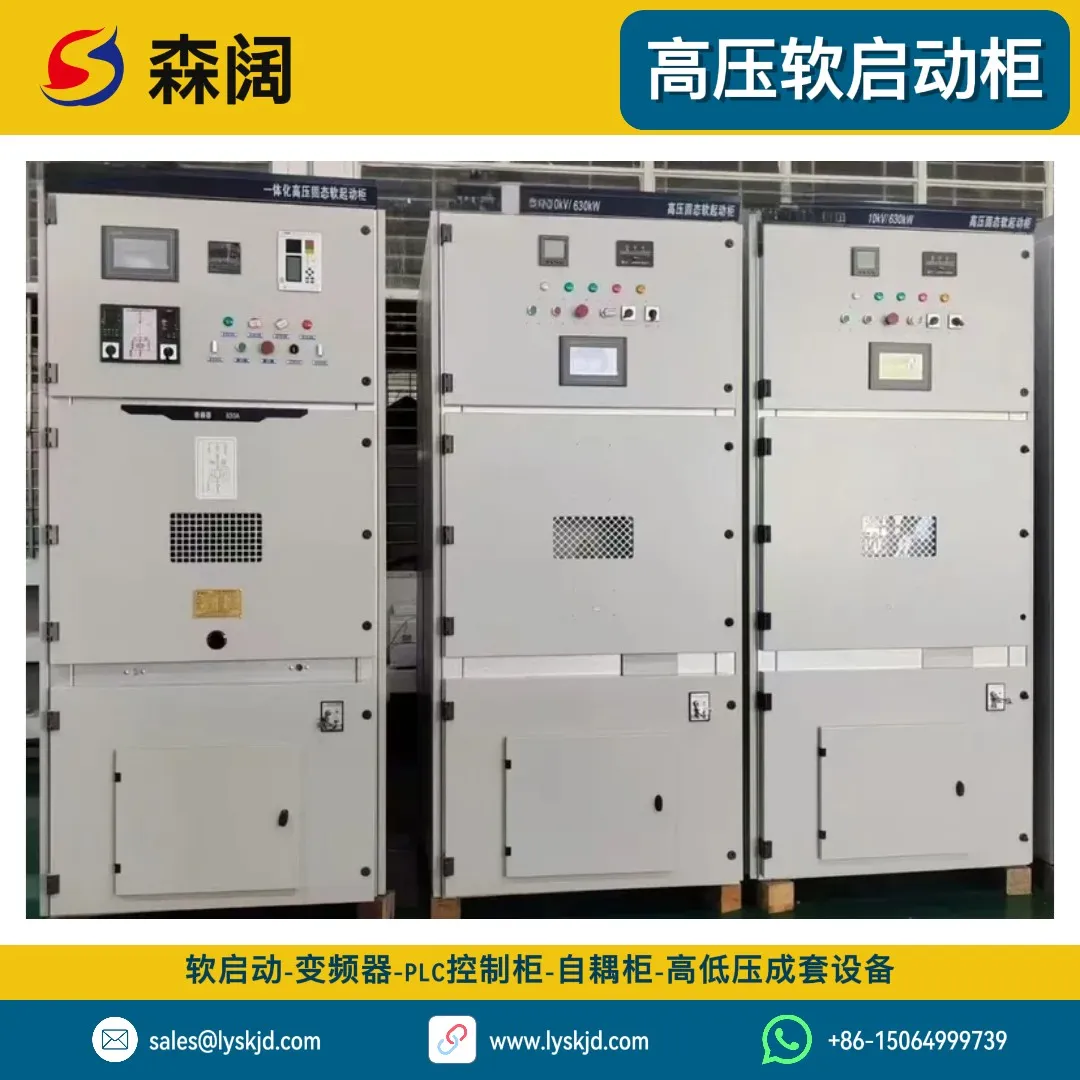
For 380V low-voltage applications, our GE300 Series Intelligent Bypass Soft Starter and GE300 Series Intelligent Online Soft Starter cover the 18.5kW~630kW power range, meeting the vast majority of low-voltage application needs. For high-voltage applications, the SKR-HV Series High-Voltage Solid-State Soft Starter Cabinet supports 3kV/6kV/10kV voltage levels with maximum power up to 3200kW.
1.3 Motor Rated Current — The Hard Constraint
Motor rated current is a hard constraint for soft starter selection. The soft starter’s rated current must be greater than or equal to the motor’s rated current — this is the basic prerequisite for ensuring safe equipment operation.
In practice, we recommend calculating as follows:
Soft Starter Rated Current ≥ Motor Rated Current × Load Factor
Where the load factor varies by load type:
- Standard loads: 1.0
- Heavy-duty loads: 1.1~1.3
- Frequent starting: 1.2~1.5
You can use the Motor Starting Current Calculator to quickly calculate starting current and provide data support for your selection.
II. Load Type — Determines Starting Mode and Selection Direction
Load type is the most critical factor in soft starter selection. Different loads have dramatically different starting characteristics, which directly determine the choice of starting mode and soft starter configuration.
2.1 Common Load Classification and Starting Characteristics
| Load Type | Typical Equipment | Starting Torque Demand | Recommended Starting Mode | Selection Advice |
|---|---|---|---|---|
| Fans | Centrifugal fans, induced draft fans | Low→High (square torque) | Voltage ramp start | Standard model sufficient |
| Pumps | Centrifugal pumps, deep-well pumps | Low→Medium | Current limit + soft stop | Soft stop required (prevent water hammer) |
| Compressors | Air compressors, refrigeration compressors | Medium→High | Current limit / kick start | Upsize 1~2 ratings |
| Conveyors | Belt conveyors, chain conveyors | High (large static friction) | Kick + voltage ramp | Heavy-duty, upsize 2 ratings |
| Crushers | Jaw crushers, cone crushers | Very high | Kick + current limit | Heavy-duty, upsize 2~3 ratings |
2.2 Special Requirements for Pump Loads — Soft Stop
Water pumps are one of the most common applications for soft starters, but many people focus only on “soft starting” while overlooking the importance of “soft stopping.”
When a pump stops suddenly, the high-speed water flowing through the pipeline continues forward due to inertia, creating a massive pressure wave at the valve — this is the water hammer effect. Water hammer can cause pipeline vibration and noise in mild cases, and pipeline rupture, valve damage, or pump impeller deformation in severe cases.
Therefore, soft starters for pump applications must have a soft stop function. Soft stopping gradually reduces the motor terminal voltage, causing the pump speed to decrease slowly and the water flow in the pipeline to decelerate smoothly, thereby eliminating the water hammer effect.
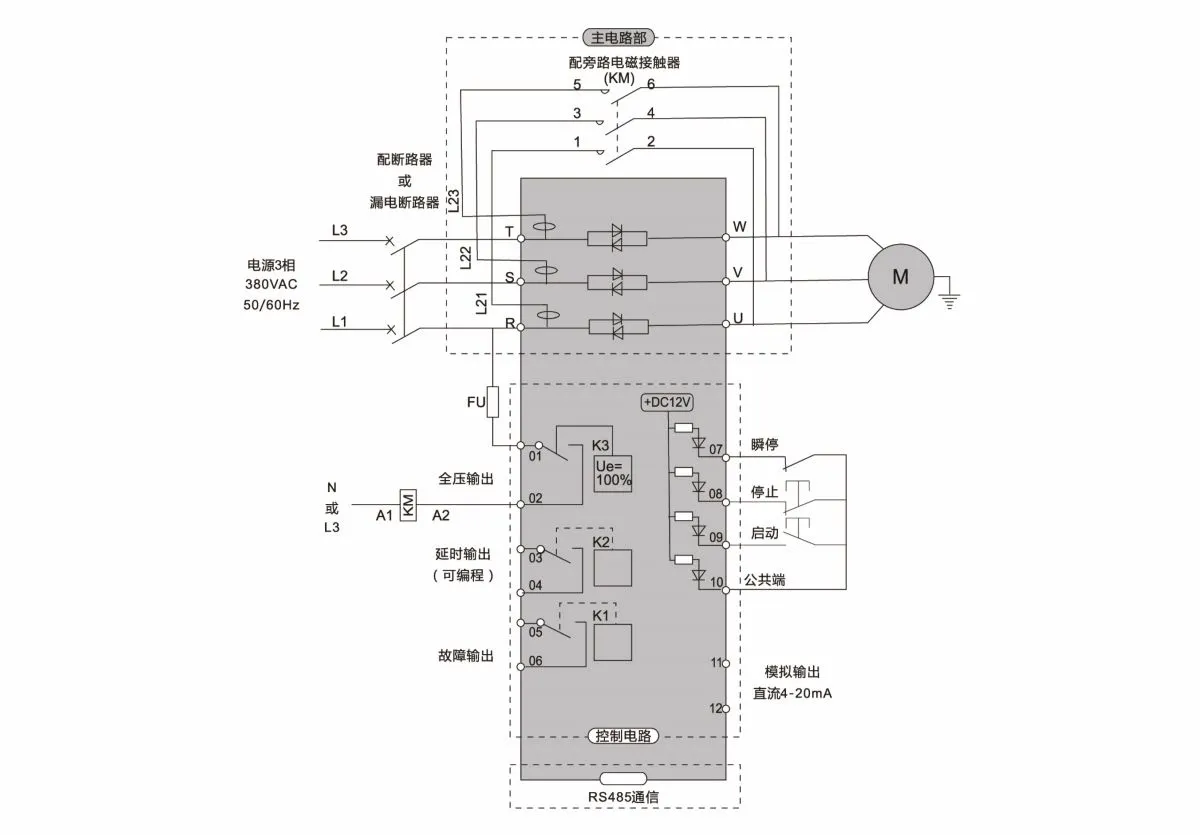
Our SKR6800 Series Intelligent Online Soft Starter and SKR300 Series Intelligent Online Soft Starter Cabinet both come standard with soft stop functionality, with stop time adjustable from 0 to 60 seconds, perfectly suited for all types of pump applications.
2.3 Kick Start for Heavy-Duty Loads
Heavy-duty equipment such as crushers and ball mills have enormous static friction between the load and drive shaft when at rest. Standard voltage ramp starting may not overcome this static friction, causing the motor to stall.
Kick start mode applies a short-duration (0.1~2 seconds adjustable) high-voltage pulse at the beginning of the start sequence, generating sufficient starting torque to overcome static friction. Once the load “breaks free,” it smoothly transitions to normal voltage ramp starting.
III. Bypass Type vs. Online Type — The Critical Selection Decision
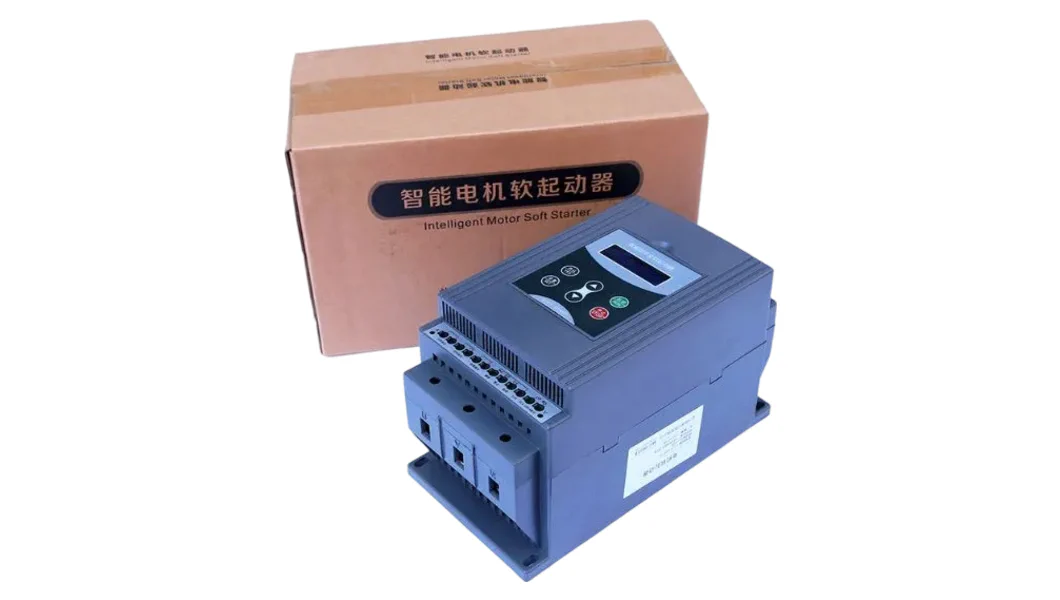
Soft starters are divided into bypass type and online type based on their operating mode. This is the most commonly confused concept in selection, as the two differ significantly in structure, performance, and applicable scenarios.
3.1 Bypass Type Soft Starter
After the motor starts, a bypass type soft starter shorts out the thyristors through a built-in bypass contactor, and the motor runs directly from the utility power supply.
Advantages:
- Low operating energy consumption — bypass contactor conduction resistance is far lower than thyristors, resulting in minimal operating losses
- Low thyristor heat generation — thyristors disengage after starting, reducing cooling requirements
- Lower cost — relatively simple structure, more affordable pricing
Applicable Scenarios: Situations requiring only starting protection without speed regulation or continuous protection during operation, such as standard fans, pumps, and air compressors.
Recommended Product: GE300 Series Intelligent Bypass Soft Starter
3.2 Online Type Soft Starter
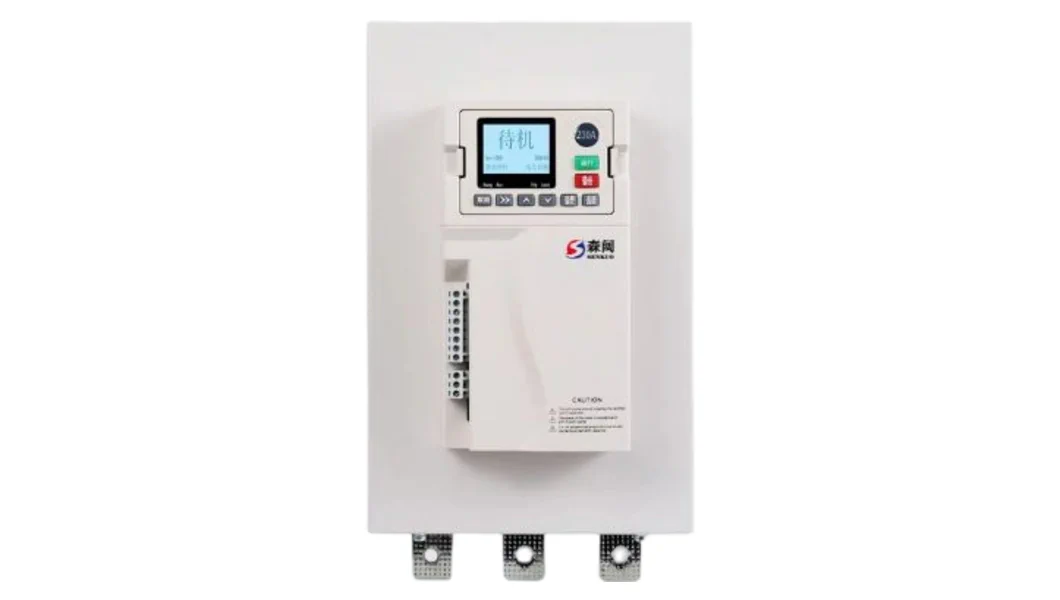
After the motor starts, an online type soft starter keeps the thyristors fully conducting, and the motor always runs through the thyristors.
Advantages:
- Real-time protection — continuously monitors motor operating status and can respond instantly to overload, phase loss, and other faults
- Soft stop function — enables smooth stopping, eliminating water hammer effect
- Comprehensive operating monitoring — real-time display of current, voltage, power, and other operating parameters
- Strong communication capability — supports RS485/Modbus and other communication protocols for easy system integration
Applicable Scenarios: Situations requiring real-time protection, soft stopping, or remote monitoring, such as water supply pump stations, fire pumps, and central air conditioning systems.
Recommended Products: GE300 Series Intelligent Online Soft Starter, SKR6800 Series Intelligent Online Soft Starter
3.3 How to Choose?
| Comparison Dimension | Bypass Type | Online Type |
|---|---|---|
| Operating Energy Consumption | Very low (bypass contactor conduction) | Slightly higher (thyristor full conduction voltage drop) |
| Real-time Protection | Effective during starting phase | Effective throughout operation |
| Soft Stop | Not supported | Supported |
| Operating Monitoring | Basic parameters | Comprehensive monitoring + communication |
| Price | Lower | Slightly higher |
| Typical Applications | Fans, air compressors | Pumps, fire pumps, HVAC |
💡 Selection Advice: If you only need starting protection, the bypass type is more economical. If you need soft stopping, real-time protection, or remote monitoring, you must choose the online type. For more technical details on bypass vs. online types, refer to Soft Starter Core Advantages Comparison: Redefining Efficiency and Reliability in Motor Control.
IV. Protection Functions — The Safety Baseline for Selection
A soft starter’s protection functions are the last line of defense for safe motor operation. Protection capabilities vary significantly between brands and models, so you must verify the following core protection functions during selection:
4.1 Essential Protection Functions
- Overload Protection: Prevents motor from running overloaded for extended periods, which can burn out windings. Overload class should be adjustable (typically 1~30 classes) to match different load characteristics
- Phase Loss Protection: Input/output phase loss detection, prevents motor burnout from single-phase operation
- Overvoltage/Undervoltage Protection: Monitors power grid voltage anomalies, prevents motor operation under abnormal voltage
- Overheating Protection: Monitors thyristor temperature, prevents thermal damage
- Three-Phase Imbalance Protection: Detects three-phase current imbalance, prevents motor damage from unbalanced operation
4.2 Advanced Protection Functions
For critical equipment or harsh operating conditions, also consider these advanced protection functions:
- Stall/Jam Protection: Rapidly cuts power when motor speed stagnates during starting
- Ground Fault Protection: Detects motor winding ground faults
- Underload Protection: Detects pump dry-running, belt breakage, and other underload conditions
- Phase Sequence Protection: Prevents motor reverse rotation due to incorrect power phase sequence
- External Fault Interface: Receives external temperature, pressure, and other sensor signals to trigger protection
Our GE300 series soft starters feature 24 comprehensive protection functions covering all the above protection needs. For detailed information, refer to the GE300 Series Soft Starter User Manual.
V. Environmental Conditions — The Often-Overlooked Factor
5.1 Ambient Temperature
A soft starter’s rated current is specified at a reference ambient temperature (typically 40°C). When the installation ambient temperature exceeds 40°C, derating must be applied as follows:
Actual Available Current = Rated Current × Derating Factor
| Ambient Temperature | Derating Factor |
|---|---|
| ≤40°C | 1.0 |
| 45°C | 0.95 |
| 50°C | 0.90 |
| 55°C | 0.85 |
| 60°C | 0.80 |
⚠️ If the ambient temperature exceeds 60°C, we recommend selecting a soft starter one size larger or improving ventilation and cooling conditions in the installation environment.
5.2 Altitude
Above 1000 meters altitude, reduced air density decreases cooling capacity and air insulation strength. Derating is required above 1000 meters:
- 1000~2000m: Current derating 5%
- 2000~3000m: Current derating 10%
- Above 3000m: Consult the manufacturer for customized solutions
5.3 Protection Rating
Choose the appropriate protection rating based on the installation environment:
- IP20: Installation inside standard distribution cabinets, dry and clean environments
- IP40: Environments with higher dust protection requirements
- IP54: Humid, dusty environments such as pump rooms and outdoor installations
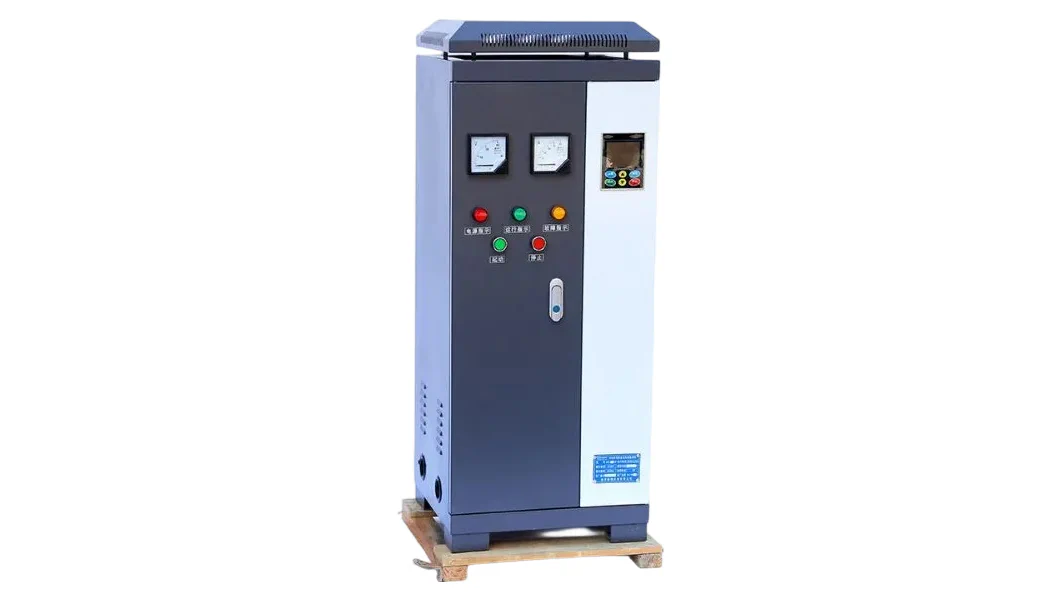
For applications requiring standalone installation (not inside a distribution cabinet), we recommend the SKR300 Series Intelligent Online Soft Starter Cabinet, whose cabinet design provides a higher protection rating and more comprehensive cooling solution.
VI. Soft Starter vs. VFD — When Should You Choose a VFD?
During the selection process, many engineers struggle with the question: should I choose a soft starter or a VFD? The core difference between the two is:
- Soft Starter: Only controls the starting/stopping process; the motor runs at full speed during operation — no speed regulation capability
- VFD (Variable Frequency Drive): Controls motor speed throughout operation, enabling stepless speed adjustment, but at a higher cost
6.1 When to Choose a Soft Starter
- The motor always runs at rated speed with no need for speed adjustment
- You only need to solve starting current impact issues
- Budget is limited, seeking cost-effectiveness
- The installation environment has strict harmonic requirements (soft starters produce no harmonics)
For more advantages of soft starters compared to VFDs, refer to Soft Starter Core Advantages Comparison: Stability as the Core, Building the Foundation of Industrial Operation.
6.2 When to Choose a VFD
- You need to adjust motor speed based on process requirements (e.g., constant pressure water supply, fan airflow regulation)
- Significant energy savings are needed (fan and pump speed regulation can save 20%~50% energy)
- Precise speed control or torque control is required
If you determine that a VFD is needed, you can use the VFD Selection Tool for quick selection, or learn about our SK600 Series General-Purpose Vector VFD and VFD Control Cabinet product lines. For VFD applications in constant pressure water supply, refer to How VFDs Achieve Constant Pressure Water Supply: Principles and Practice.
VII. Selection Process Summary
Combining all the factors above, soft starter selection can follow this standardized process:
- 1 Determine Motor Parameters: Rated power, rated voltage, rated current, power factor
- 2 Analyze Load Type: Light/medium/heavy load, whether soft stop or kick start is needed
- 3 Choose Operating Mode: Bypass type (economical) or online type (full-featured)
- 4 Confirm Protection Requirements: Essential + advanced protections, verify completeness
- 5 Evaluate Environmental Conditions: Temperature, altitude, protection rating, calculate derating factors
- 6 Finalize Specifications: Integrate all factors to determine the soft starter model and power rating
VIII. Common Selection Mistakes and How to Avoid Them
Mistake 1: Bigger Is Always Better
Many engineers habitually upsize the soft starter by 2~3 power ratings for “insurance.” In reality, excessive upsizing leads to:
- Reduced overload protection sensitivity, making it impossible to effectively protect the motor
- Decreased starting current limiting precision
- Wasted cost
Correct Approach: Choose the appropriate upsizing factor based on load type — no upsizing for light loads, 1~3 ratings for heavy loads.
Mistake 2: Ignoring Starting Frequency
If the motor requires frequent starting (e.g., more than 10 starts per hour), the soft starter’s thyristors generate substantial heat. A standard soft starter may fail to operate properly due to overheat protection.
Correct Approach: For frequent starting applications, choose a heavy-duty model or one with enhanced cooling specifications, and inform the supplier of the actual starting frequency during selection.
Mistake 3: Confusing Bypass and Online Types
Some users purchase a bypass type soft starter but expect it to provide soft stop functionality — this is impossible. In a bypass type, the thyristors are shorted out after starting, so the stopping process cannot be controlled.
Correct Approach: When soft stop functionality is required, you must choose an online type soft starter.
Mistake 4: Neglecting Grid Capacity
In weak grid environments (small transformer capacity or long power supply lines), even with a soft starter, the starting current may still cause grid voltage dips that affect other equipment on the same grid.
Correct Approach: In weak grid environments, use current limit starting mode and set the current limit multiplier to a lower level (e.g., 2× rated current). If necessary, consult the power utility to confirm grid capacity. For the role of soft starters in smart power distribution systems, refer to Application and Advantages of Smart Power Distribution Systems in Modern Factories and Application and Development of Smart Power Distribution Systems in Industrial Fields.
IX. Quick Selection Reference Table
| Application Scenario | Recommended Type | Starting Mode | Power Margin | Recommended Product |
|---|---|---|---|---|
| Centrifugal Fan | Bypass Type | Voltage Ramp | 1.0× | GE300 Bypass |
| Water Supply Pump | Online Type | Current Limit + Soft Stop | 1.0× | GE300 Online |
| Air Compressor | Bypass Type | Current Limit | 1.1~1.2× | GE300 Bypass |
| Fire Pump | Online Type | Current Limit + Soft Stop | 1.1× | SKR6800 Online |
| Belt Conveyor | Online Type | Kick + Voltage Ramp | 1.2~1.3× | GE300 Online |
| Crusher | Online Type (Heavy-Duty) | Kick + Current Limit | 1.3~1.5× | SKR6800 Online |
| Large Pump Station (HV) | HV Solid-State Soft Starter Cabinet | Constant Current / Voltage Ramp | 1.1~1.2× | SKR-HV HV Cabinet |
| Mine Fan (HV) | HV Solid-State Soft Starter Cabinet | Voltage Ramp + Soft Stop | 1.2× | SKR-HV HV Cabinet |
X. Final Thoughts
Soft starter selection may seem straightforward, but it actually involves comprehensive consideration across multiple dimensions: motor parameters, load characteristics, operating mode, protection requirements, and environmental conditions. The core principle of selection is: choose the type based on load characteristics, choose the specifications based on motor parameters, and make corrections based on environmental conditions.
If you still have questions during the selection process, here are ways to get professional support:
- Use the Soft Starter Intelligent Selection Calculator for quick selection recommendations
- Refer to the GE300 Series Soft Starter User Manual for detailed technical parameters
- Contact our technical advisors for one-on-one selection guidance
For overall low-voltage distribution system selection, refer to Industrial Low-Voltage Distribution Cabinet Selection Guide and Application Practice; for high-voltage distribution equipment selection, refer to Technical Features and Selection Guide for High Voltage Switchgear; for comparison with traditional reduced-voltage starting solutions, learn about the technical features of the Autotransformer Reduced Voltage Starting Cabinet.
Choosing the right soft starter is not just about protecting your equipment — it’s about safeguarding the stable operation of your entire production system. We hope this article helps you avoid common pitfalls and get it right the first time.