Energy Saving Renovation is a False Proposition (Smart People Have Long Used Fan VFDs)

Liu Technician
Automation System EngineerFocused on industrial automation and VFD design, with 10 years of experience in industrial control system integration, specializing in factory automation transformation and energy management system implementation.
Have you noticed a strange phenomenon?
Factory bosses are complaining about electricity bills flowing away like water, while at the same time investing疯狂 in various “energy saving renovation” projects. Today they change to LED lights, tomorrow they install solar panels, the day after tomorrow they add a waste heat recovery system. What’s the result? The numbers on the electricity bill are still sky-high.
I’ve seen too many such scenes: the workshop director takes an energy saving renovation report to the boss to claim credit, saying “we saved another 5% on electricity this year”. The boss nods, then turns around and scolds the finance department: “Why has the electricity bill increased by 30,000 this month?”
Energy saving renovation is like a game of the emperor’s new clothes.
Everyone is talking about energy saving, but no one dares to admit a fact: 90% of energy saving renovation projects are doing useless work.
Why did you renovate your fans but didn’t save money? The answer might make you doubt your life.
You’ve Been Deceived, The Truth About Energy Saving Renovation Is This
I once did an energy saving diagnosis for a machinery factory with an annual output value of 500 million yuan. Their workshop was equipped with 8 large centrifugal fans, running 24 hours a day without interruption. The boss told me that the annual electricity cost for these fans alone exceeded 2 million yuan.
To save money, they just completed an energy saving renovation last year: replacing the original ordinary motors with high-efficiency motors and adding variable frequency controllers. After the renovation was completed, the supplier confidently said it could save 30% on electricity bills.
What was the result? After half a year, the electricity bill only decreased by less than 5%. The boss was so angry that he wanted to settle accounts with the supplier, but the supplier argued: “Our equipment is fine, you just don’t know how to use it.”
Later, when I went to the site, I found that the problem was with their usage method.
It turned out that although their fans were equipped with VFDs, the set parameters were still the same as before. During the day when production was in progress, the fans ran at full speed; at night when there was no production, the fans still kept running at low speed.
The VFD they spent hundreds of thousands on was like a decoration.
This is the truth about most energy saving renovation projects: they look beautiful, but they’re actually useless.
Why is this happening? Because most people’s understanding of energy saving is wrong.
True Energy Saving Is Not About Reducing Consumption, But About Supplying Energy On Demand
The traditional energy saving renovation approach is: on the basis of existing equipment, reduce energy consumption through technical means. For example, replace with a more efficient motor, or optimize operating parameters.
But this approach has a fatal flaw: it doesn’t solve the problem fundamentally.
90% of energy waste in industrial production is not due to low equipment efficiency, but due to “excessive supply”.
Take an example: the function of a fan is to provide ventilation for the workshop. During production peak hours, both personnel and equipment in the workshop are running at full load, requiring a large amount of fresh air. But during production troughs, such as lunch break or at night, there are only a few people on duty in the workshop, who don’t need that much air volume at all.
But most factories’ fans run at full speed 24 hours a day. Regardless of whether there are people in the workshop or how much production tasks there are, the fans are拼命 blowing air.
This is like your home air conditioner, which is set to the lowest temperature regardless of the indoor temperature. Can the electricity bill not be high?
True energy saving is not about reducing consumption, but about supplying energy on demand.
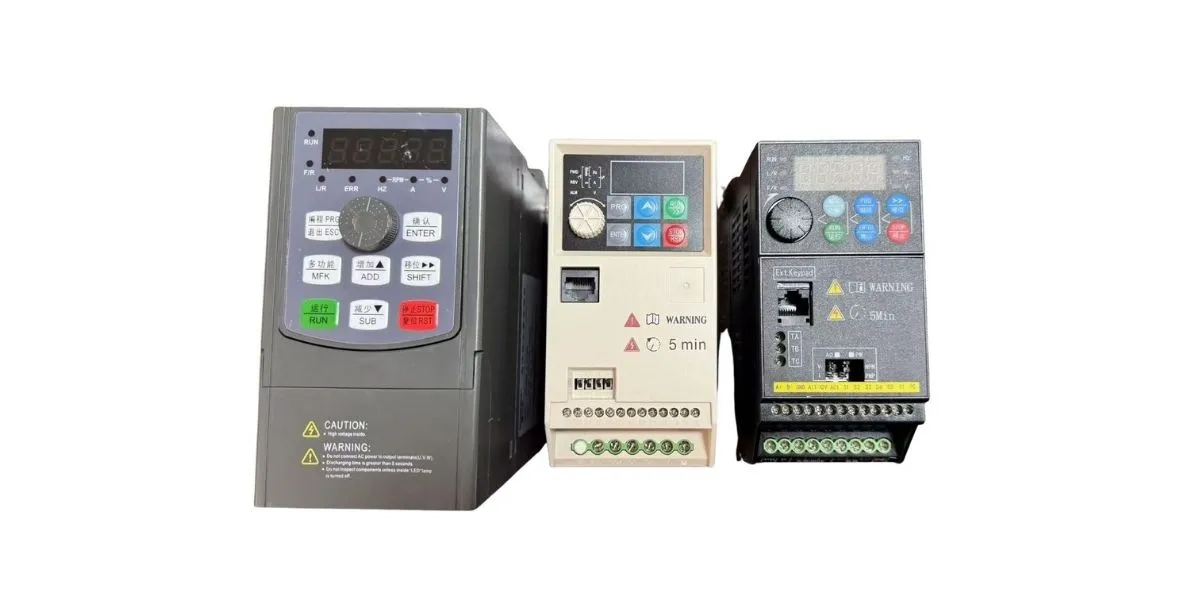
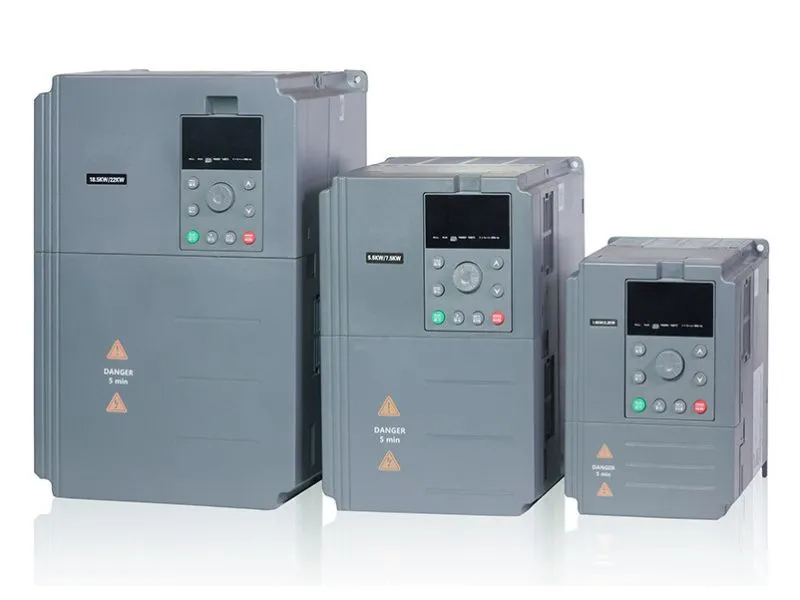
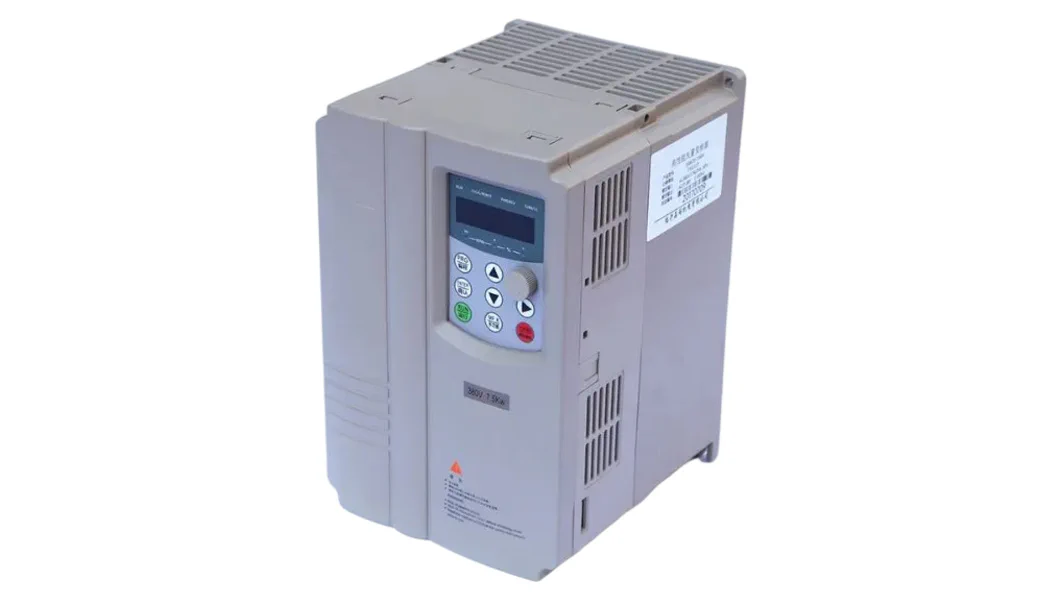
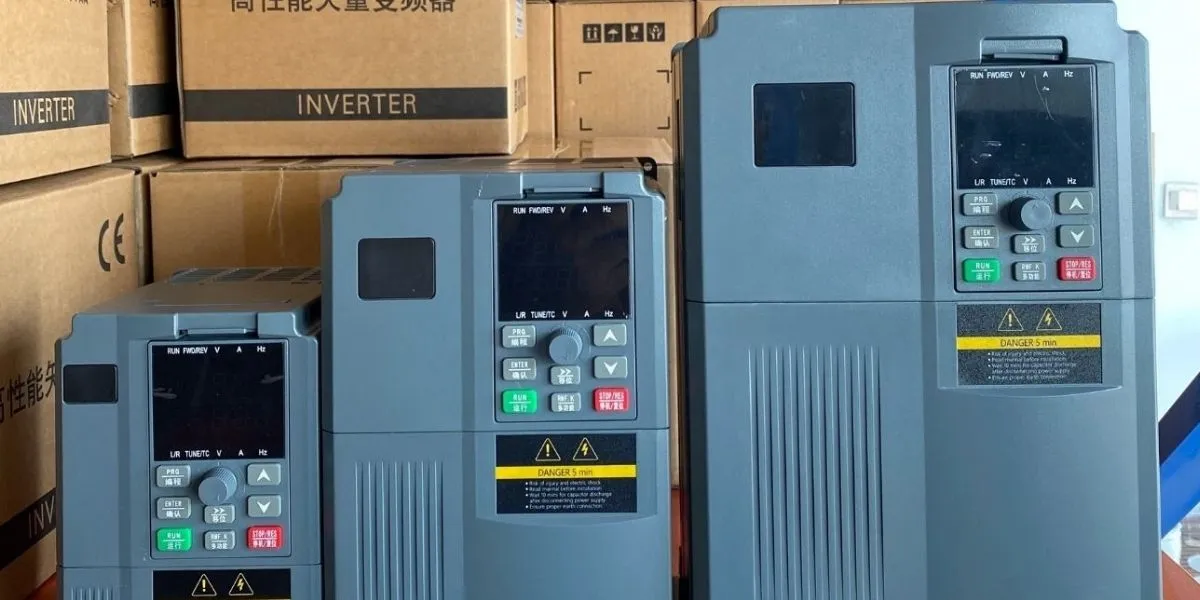
Fan VFDs are the ultimate solution to this problem. If you want to learn more about fan VFD products, you can check our VFD Product Center, where there are detailed product specifications and application cases.
Fan VFDs, Turning Energy Saving From “Metaphysics” To “Science”
The principle of fan VFDs is actually very simple: it precisely controls the speed of the fan by changing the power supply frequency of the motor.
When the workshop needs a lot of ventilation, the VFD makes the fan run at full speed; when the workshop doesn’t need that much air volume, the VFD makes the fan run at reduced speed.
Just like your home air conditioner, which automatically adjusts the cooling capacity according to the indoor temperature.
I once did a fan VFD renovation for a chemical factory. Their workshop was equipped with 6 large axial fans, and the original operation mode was: all on during the day, 2 on at night. After renovation, we set up automatic adjustment parameters according to the actual ventilation needs of the workshop.
What was the result? In the first month after the renovation was completed, the electricity bill decreased by 42%. The boss directly gave me a 50,000 yuan red envelope.
This is not an isolated case. According to my experience, the energy saving effect of fan VFD renovation is usually between 30%-60%. And the investment return period is generally no more than 18 months.
Installing a fan VFD is like installing an intelligent housekeeper for your factory.
It can automatically adjust energy supply according to production needs, making every kilowatt-hour of electricity count.
Why Do 90% Of People Fail After Installing Fan VFDs?
I’ve seen many factory bosses spend a lot of money on fan VFDs, but fail to achieve the expected energy saving effect.
Why is this happening? Because they made a fatal mistake: treating fan VFDs as ordinary energy saving equipment.
In fact, the energy saving effect of fan VFDs depends on two key factors:
- Reasonable parameter settings
- Professional operation and maintenance management
Most factories, after installing fan VFDs, just have electricians casually set some parameters and call it a day. They have no idea how to adjust the VFD’s operation mode according to the actual needs of the workshop.
It’s like buying a Ferrari and using it to haul goods.
I once met a client whose workshop was equipped with 4 fan VFDs, all set with the same parameters. But in reality, the load conditions of these 4 fans were completely different: Fan 1 was responsible for ventilating the welding workshop, Fan 2 for the assembly workshop, Fan 3 for the painting workshop, and Fan 4 for the warehouse.
Different workshops have completely different ventilation needs. The welding workshop needs a large amount of fresh air to exhaust welding fumes, while the warehouse only needs a small amount of ventilation to keep dry.
But their VFD parameters were all set the same: running at full speed during the day and at low speed at night.
With such settings, how could they possibly achieve the ideal energy saving effect?
The Correct Way To Install Fan VFDs
So, how can we make fan VFDs achieve maximum energy saving effect?
According to my experience, the correct approach should be like this:
Step 1: Conduct a Comprehensive Energy Audit
Before installing fan VFDs, first conduct a comprehensive audit of the factory’s energy consumption situation. Understand the energy consumption situation of each workshop and each piece of equipment, and identify the main links of energy waste.
Step 2: Select the Appropriate VFD
Different fans require different types of VFDs. When selecting VFDs, you should choose suitable products based on factors such as the fan’s power, load characteristics, and operating environment. If you want to quickly select a VFD model suitable for fans, you can use our VFD Selection Tool, which can quickly recommend suitable models based on specific parameters.
Step 3: Carry Out Professional Installation and Commissioning
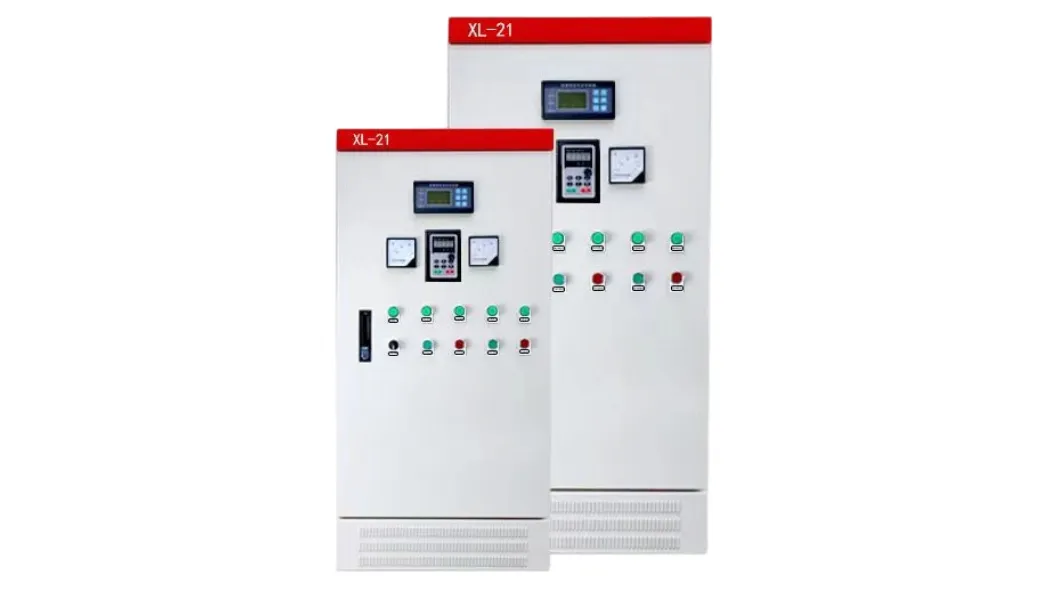
When installing VFDs, professional technical personnel should carry out installation and commissioning. According to the actual ventilation needs of the workshop, set reasonable operating parameters. If you need professional variable frequency control system solutions, you can check our Variable Frequency Drive Control Cabinet product, which integrates VFDs, control systems, and protection devices to provide a complete drive solution for fans.
Step 4: Establish a Sound Operation and Maintenance Management System
After installing VFDs, establish a sound operation and maintenance management system. Regularly inspect and maintain VFDs, and timely adjust operating parameters according to changes in production needs.
Remember: Fan VFDs are not a one-time solution, but an energy saving system that needs continuous optimization.
Conclusion: The Ultimate Answer To Energy Saving Renovation
Returning to the question at the beginning of the article: Why are most energy saving renovation projects doing useless work?
Because most people’s understanding of energy saving is wrong. They treat energy saving as a technical means, not as a management concept.
True energy saving is not about reducing consumption, but about supplying energy on demand.
Fan VFDs are the best tool to achieve energy supply on demand. They can make every kilowatt-hour of electricity in your factory count, truly achieving the goal of energy saving and efficiency improvement.
If you’re still worried about your factory’s electricity bills, stop wasting money on those useless energy saving renovations.
Installing fan VFDs is the ultimate answer to solving the problem.
If you want to learn more about industrial automation and energy saving solutions, you can check our Industrial Automation Solutions page, where there are more industry cases and technical solutions.
Take action now and let your factory truly achieve energy saving and efficiency improvement.