You Will Probably Choose the Wrong VFD, Because 90% of People Ignore This Detail

Liu Technician
Automation System EngineerFocused on industrial automation and VFD design, with 10 years of experience in industrial control system integration, specializing in factory automation transformation and energy management system implementation.
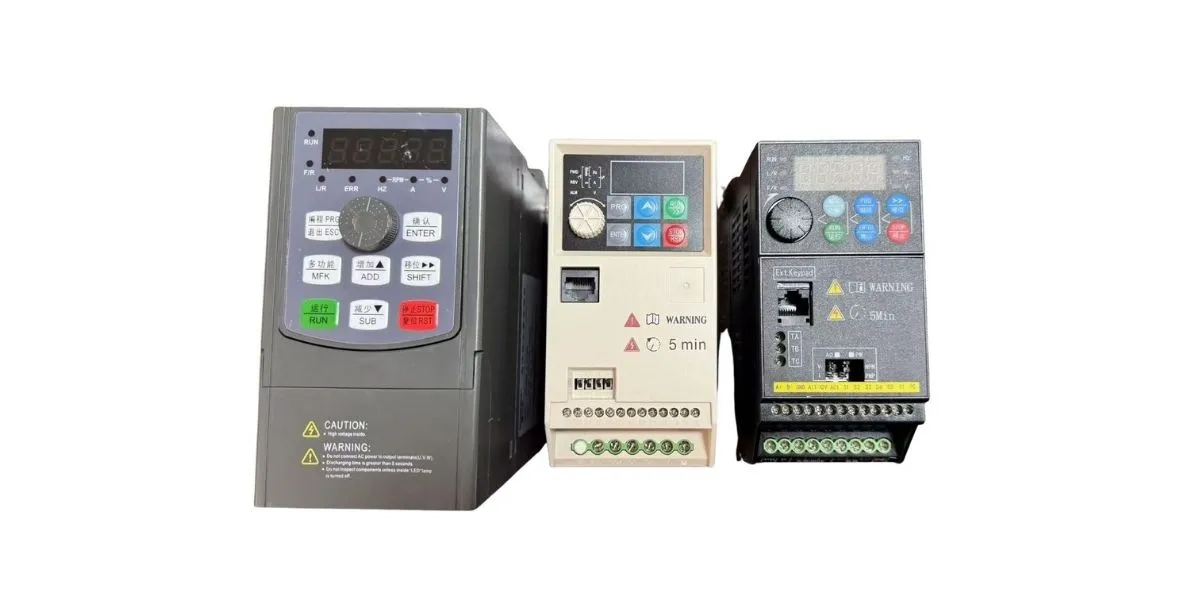
Have you ever had such an experience?
Spent tens of thousands of yuan on an imported VFD that frequently alarms in less than half a year; or chose a cheap domestic one to save money, only to have repairmen上门 every day due to high failure rates; or clearly selected a model with matching parameters, but found that the actual energy consumption is 30% higher than expected.
I’ve seen too many factory managers step on pitfalls in VFD selection. Some pursue the most expensive imported brands, only to find they don’t need those high-end features at all; Some only look at price, resulting in VFDs that can’t withstand the harsh workshop environment; Others copy their peers’ selection plans, ignoring the uniqueness of their own working conditions.
In fact, 90% of people choose the wrong VFD not because of insufficient technology, but because they ignore the most critical detail: working condition matching degree.
Today, I’m here to help you avoid these pitfalls and select the VFD that truly suits you.
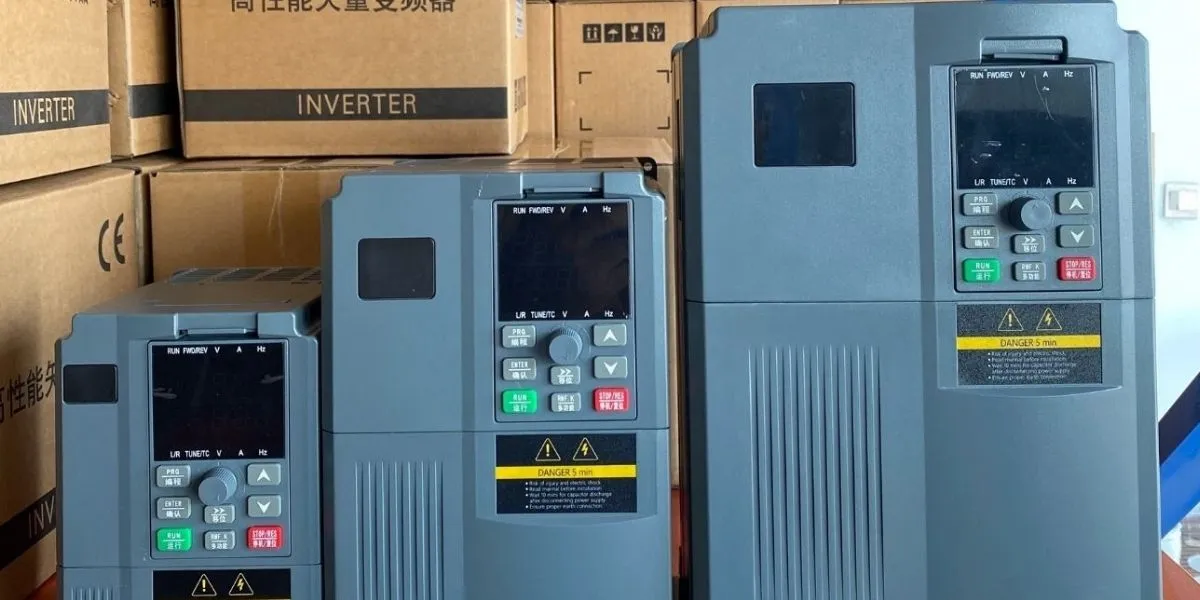
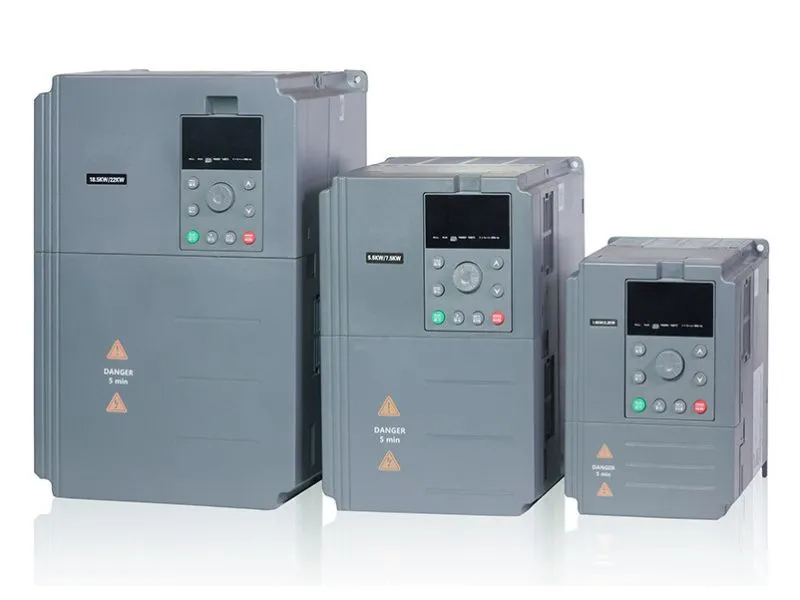
If you want to quickly get professional selection advice, you can use our VFD Selection Tool, which can quickly recommend suitable models based on your specific parameters.
What You Think is Selection is Actually Ineffective Effort
Many people’s VFD selection process is like buying drinks in a supermarket: Looking at brand, price, and packaging, but rarely at the ingredient list.
They spend days researching VFD technical parameters, comparing overload capacity, speed range, and communication protocols of different brands, but never seriously analyze their actual working conditions.
The result is that the selected VFD either has excess performance or is overwhelmed.
The essence of selection is not to choose the best, but to choose the most suitable.
I once met a customer, who had a 110kW water pump in his factory, previously using an imported brand VFD, which burned out the power module in less than a year.
Later, when I went to the site, I found that this pump starts and stops dozens of times every day, and the VFD he selected was a regular universal type, which was completely unsuitable for frequent start-stop working conditions.
Later, I recommended him a VFD specifically designed for water pumps, which cost only half of the previous one, but has been working without problems for three years.
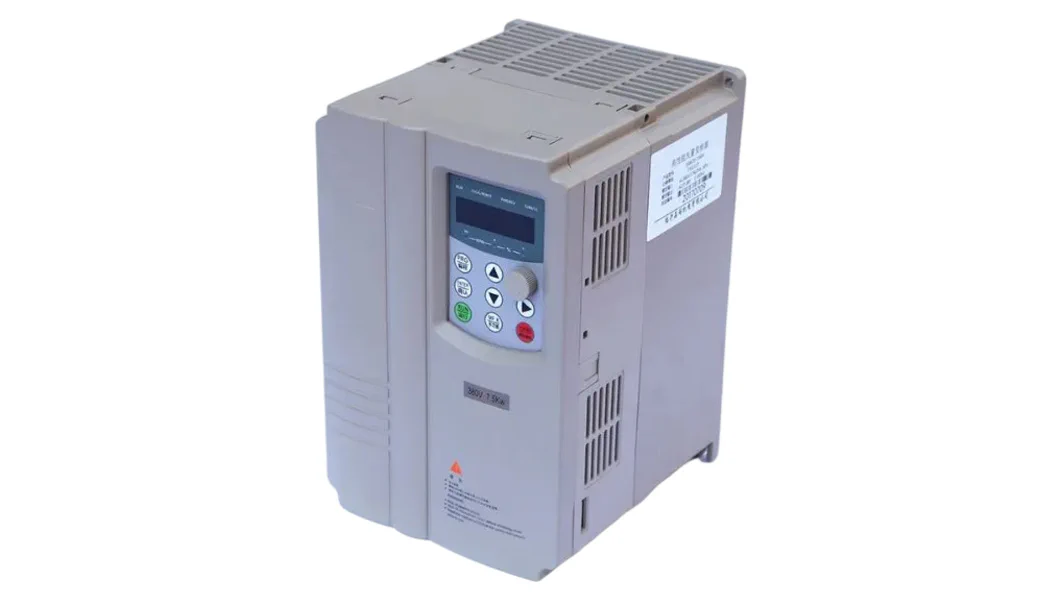
This is the importance of working condition matching. If you want to learn more about VFD products, you can check our VFD Product Center, where there are detailed product specifications and application cases.
The Detail That 90% of People Ignore: Four-Step Working Condition Analysis
So, how can we achieve working condition matching? I’ve summarized a “Four-Step Working Condition Analysis Method”, as long as you follow this method, you can select the VFD that is most suitable for you.
Step 1: Analyze Load Type
VFD load types are mainly divided into three categories:
- Constant torque load (such as conveyor belts, mixers)
- Constant power load (such as machine tool spindles, winders)
- Quadratic law load (such as fans, pumps)
Different load types have completely different requirements for VFDs. If you need to learn more about motor control and load types, you can check our Motor Control Solutions, where there are detailed technical explanations and application cases.
For example, constant torque loads require VFDs with strong overload capacity, because they need to overcome large static friction during startup; while quadratic law loads pay more attention to the VFD’s speed range and energy-saving effects, because the power consumption of such loads is proportional to the square of the speed.
The first step in selecting a VFD is not to look at parameters, but to look at load type.
Step 2: Evaluate Operating Environment
The operating environment of the VFD directly affects its service life and reliability. Many people only look at technical parameters when selecting VFDs, but ignore environmental factors such as temperature, humidity, and dust in the workshop.
For example, in high-temperature and high-humidity environments, you need to choose VFDs with moisture-proof coatings and high-temperature protection; in workshops with a lot of dust, you need to choose VFDs with dust-proof enclosures and heat dissipation designs; in environments with corrosive gases, you need to choose VFDs with anti-corrosion coatings.
I once met a customer, who used regular VFDs in his seaside factory, which were scrapped due to salt spray corrosion in less than half a year. Later, I recommended him a VFD specifically designed for seaside environments, which has been working without problems for five years.
Environment determines the service life of the VFD, which is more important than parameters.
Step 3: Determine Control Requirements
Different application scenarios have different control requirements for VFDs. For example,
- For equipment that requires precise positioning, you need to select VFDs with high-precision encoder feedback;
- For production lines that require multiple equipment to run synchronously, you need to select VFDs that support fieldbus communication;
- For equipment that requires remote monitoring and debugging, you need to select VFDs that support IoT functions.
Many people only look at basic speed control functions when selecting VFDs, but ignore the importance of these advanced control functions. The result is that the purchased VFD cannot meet the actual production needs, and they have to spend more money to upgrade and transform.
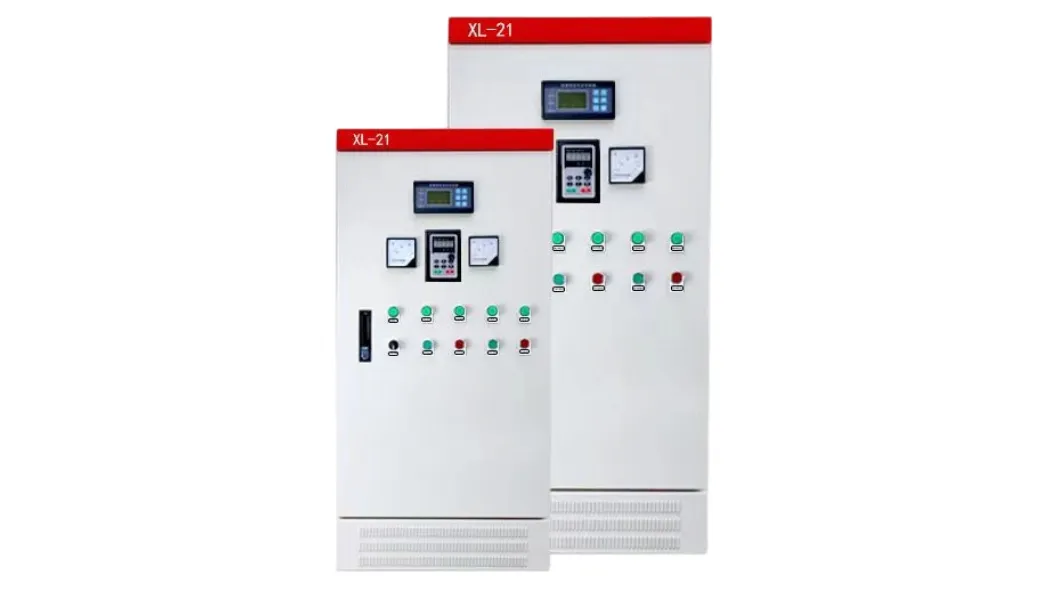
If you want to learn more about VFD control functions, you can check our Variable Frequency Drive Control Cabinet product page, where there are detailed control schemes and technical parameters.
Control requirements determine the functional configuration of the VFD, which is more important than brand.
Step 4: Calculate Cost-Benefit
Finally, we need to calculate the cost-benefit of the VFD. The cost here includes not only the purchase cost, but also installation cost, maintenance cost, energy consumption cost, etc.
Many people only look at the purchase price when selecting VFDs, but ignore the long-term usage cost. For example, a cheap VFD may have higher energy consumption, which is actually more expensive in long-term use; a higher-priced VFD may have better reliability, lower maintenance cost, and actually more cost-effective in long-term use.
I once did a cost analysis for a customer, he previously used a cheap domestic VFD, purchase price was 10,000 yuan, but annual maintenance and energy consumption costs added up to 5,000 yuan; later, I recommended him a slightly higher-priced VFD, purchase price was 15,000 yuan, but annual maintenance and energy consumption costs added up to only 2,000 yuan. Over five years, the latter saved him 100,000 yuan compared to the former.
When selecting a VFD, you cannot only look at price, but also at long-term cost-benefit.
Three Key Principles for Selecting the Right VFD
In addition to the above four-step method, I’ve also summarized three key principles for selecting the right VFD, hoping to help you avoid more pitfalls.
Principle 1: Reject Following the Crowd, Only Choose What Suits You
Many people like to follow the crowd when selecting VFDs, using whatever brand others use, selecting whatever model others select. But in fact, each factory’s working conditions are different, what suits others may not suit you.
For example, others’ workshop has low temperature and less dust, may use ordinary VFDs; but your workshop has high temperature and a lot of dust, you need to use specially designed high-temperature and dust-proof VFDs.
What suits you is the best, don’t blindly follow the crowd.
Principle 2: Value Pre-sales Service, Ignore Brand Halo
Many people only look at the brand when selecting VFDs, believing that imported brands are definitely better than domestic brands. But in fact, many domestic VFDs now have very mature technology, quality is not worse than imported brands, and prices are cheaper, after-sales service is more timely.
I’ve seen too many customers who, due to superstition about imported brands, spent several times the price to buy imported VFDs, only to find no one to repair them when problems occur, or repair costs are exorbitant.
On the contrary, many domestic brands have very good pre-sales service, will send engineers to the site for working condition analysis, help you select the most suitable VFD model, and after-sales service is more timely.
Pre-sales service is more important than brand, because it directly determines whether the VFD you select is suitable for you.
Principle 3: Focus on Long-term Value, Don’t Only Look at Short-term Cost
Many people only look at short-term costs when selecting VFDs, believing that cheaper is better. But in fact, the service life of VFDs is generally 5-10 years, short-term price differences are negligible in the face of long-term usage costs.
For example, a cheap VFD may need to be replaced after 3 years, while a good-quality VFD may not need to be replaced after 10 years. From a long-term perspective, the latter has lower cost.
When selecting a VFD, focus on long-term value, not just short-term cost.
For the Last 10% of People
If you can read this far, congratulations, you have surpassed 90% of people.
Because you have realized the importance of working condition matching, instead of blindly pursuing brand and price.
Selecting a VFD is actually not difficult, the difficulty is to跳出 the inherent thinking mode, start from working conditions, instead of starting from parameters.
I hope today’s sharing can help you select the VFD that truly suits you, making your factory production more efficient, stable, and energy-saving.
If you want to learn more about industrial automation and energy-saving solutions, you can check our Industrial Automation Solutions page, where there are more industry cases and technical solutions.
Selecting the right VFD is like buying a long-term insurance for your factory.