How VFDs Achieve Constant Pressure Water Supply: Principles and Practice

Liu Technician
Automation System EngineerFocused on industrial automation and VFD design, with 10 years of experience in industrial control system integration, specializing in factory automation retrofit and energy management system implementation.
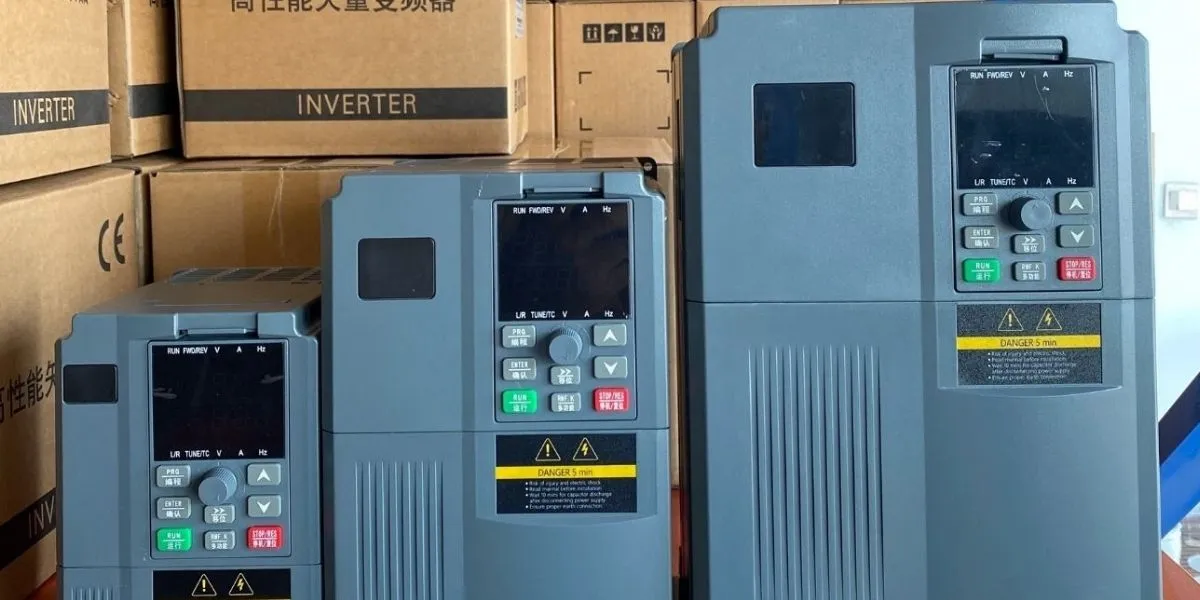
In the field of industrial automation, the application of VFDs is becoming increasingly widespread, with constant pressure water supply being one of the most typical application scenarios. Traditional constant pressure water supply systems typically use water towers, elevated tanks, or pressure tanks, which suffer from high energy consumption, unstable water pressure, and high maintenance costs. VFDs achieve stable water pressure regulation through precise motor speed control while significantly reducing energy consumption. This article will detail how VFDs achieve constant pressure water supply and the key technical points in practical applications. For more applications of smart power distribution systems, please refer to Application and Advantages of Smart Power Distribution Systems in Modern Factories.
Core Principles of Constant Pressure Water Supply
The core of a constant pressure water supply system is to maintain constant water pressure, stably outputting the set pressure regardless of water consumption changes. VFDs achieve this goal through the following key steps:
Pressure Signal Acquisition and Feedback
Pressure sensors are installed on the water supply pipeline to monitor water pressure changes in real-time. The sensors convert water pressure signals into electrical signals and feed them back to the VFD’s PID controller.
PID Control Algorithm Adjustment
The built-in PID controller of the VFD automatically adjusts the output frequency based on the difference between the set pressure and the actual feedback pressure, thereby controlling the speed of the water pump motor. When water consumption increases and causes water pressure to drop, the PID controller increases the output frequency, increases the pump speed, and raises the water supply pressure. When water consumption decreases and causes water pressure to rise, the PID controller reduces the output frequency, slows down the pump speed, and maintains stable pressure.
Multi-Pump Switching and Cycle Control
In large water supply systems, multiple pumps are typically operated in parallel. VFDs achieve automatic switching and cyclic operation of pumps through built-in multi-pump control logic, ensuring balanced operating time for each pump and extending equipment life. When a single pump cannot meet water supply demand, the VFD automatically starts the second, third pump, and so on, until the set pressure is reached.
Key Points for VFD Selection in Constant Pressure Water Supply Systems
Selecting the appropriate VFD is crucial for the stable operation of a constant pressure water supply system. Here are several factors to consider during selection:
Power Matching
The rated power of the VFD should be slightly greater than the rated power of the water pump motor, typically recommended to be 1.1-1.2 times the motor power. This is because water pumps may experience brief overloads during startup, requiring the VFD to have sufficient margin to handle them.
Control Method Selection
For constant pressure water supply systems, V/F control or vector control methods are typically used. V/F control is suitable for applications with lower control precision requirements and lower cost. Vector control provides higher control precision and dynamic response speed, making it suitable for applications with higher water pressure stability requirements.
Function Configuration
Choose a VFD with PID control and multi-pump control functions, as these are the foundation for achieving constant pressure water supply. Additionally, consider the VFD’s communication interfaces, protection functions, etc., to facilitate system integration and maintenance.
Protection Rating
Select the appropriate protection rating based on the installation environment. If installed outdoors or in humid environments, choose a VFD with a higher protection rating, such as IP54 or higher.
Installation and Commissioning of Constant Pressure Water Supply Systems
System Design Points
When designing a constant pressure water supply system, it’s necessary to reasonably select supporting equipment such as water pumps, pipelines, and valves. The pump head and flow rate should meet maximum water supply demand, and the pipeline diameter should be determined based on flow calculations to avoid water pressure loss due to excessive pipeline resistance. For low-voltage power distribution system selection, please refer to Industrial Low-Voltage Switchgear Selection Guide and Application Practice.
Installation Precautions
The VFD should be installed in a well-ventilated, dry, and corrosive-gas-free environment. Attention should be paid to heat dissipation during installation, avoiding direct sunlight and high-temperature environments. Pressure sensors should be installed on the pipeline near the pump outlet to ensure accurate water pressure signal collection.
Commissioning Steps
- Parameter Setting: Set the basic parameters of the VFD according to the rated parameters of the water pump motor and system requirements, such as rated power, rated current, rated frequency, etc.
- PID Parameter Adjustment: Adjust the proportional coefficient, integral time, and derivative time of the PID controller based on actual water supply conditions to ensure stable water pressure.
- Multi-Pump Control Setting: If using multi-pump operation, set the pump switching logic and cycle time to ensure balanced pump operation.
- Trial Run: Start the system, observe water pressure changes and pump operation, and adjust parameters based on actual results until optimal operating status is achieved.
Energy Saving Effects and Economic Benefits of Constant Pressure Water Supply Systems
Energy Saving Principles
Traditional constant pressure water supply systems typically use valves to regulate flow, resulting in significant throttling losses. VFDs control flow by adjusting pump speed, avoiding throttling losses and significantly reducing energy consumption. According to actual application cases, VFD constant pressure water supply systems typically achieve energy savings of 20-40%. For energy-saving applications of smart power distribution systems, please refer to Application and Development of Smart Power Distribution Systems in the Industrial Field.
Economic Benefit Analysis
Taking a medium-sized water supply system as an example, assume the system uses three 55kW water pumps, operating 20 hours per day, with an electricity price of 0.8 yuan/kWh. Under traditional methods, the system’s annual electricity consumption is approximately: 3×55×20×365=1,198,500 kWh, with an annual electricity cost of approximately 958,800 yuan. After adopting a VFD constant pressure water supply system, assuming a 30% energy saving rate, the annual electricity consumption is approximately 838,950 kWh, with an annual electricity cost of approximately 671,160 yuan, saving approximately 287,640 yuan in electricity costs annually.
Investment Return Cycle
The investment in a VFD constant pressure water supply system mainly includes equipment costs for VFDs, water pumps, pipelines, valves, etc., and installation and commissioning costs. Taking a system with an investment of approximately 300,000 yuan as an example, based on annual electricity cost savings of 287,600 yuan, the investment return cycle is approximately 1.04 years, showing significant economic benefits.
Maintenance and Common Fault Handling of Constant Pressure Water Supply Systems
Routine Maintenance Points
- Regular Inspection: Regularly check the operating status of the VFD, including temperature, humidity, vibration, etc., to ensure normal equipment operation.
- Cleaning and Maintenance: Regularly clean the VFD’s cooling fan and heat sink to avoid poor heat dissipation due to dust accumulation.
- Parameter Backup: Regularly backup the VFD’s parameter settings to enable quick recovery in case of equipment failure or replacement.
- Pressure Sensor Calibration: Regularly calibrate pressure sensors to ensure pressure signal accuracy.
Common Fault Handling
- Unstable Water Pressure: May be due to unreasonable PID parameter settings or pressure sensor failure. Check if PID parameters are appropriate and if the pressure sensor is working normally.
- Pump Cannot Start: May be due to VFD failure, motor failure, or control circuit failure. Check the VFD’s fault codes, motor insulation resistance, and whether control circuits are normal.
- VFD Overheating: May be due to poor heat dissipation or high ambient temperature. Check if the cooling fan is operating normally, clean dust from the heat sink, and improve ventilation conditions.
- Multi-Pump Switching Abnormality: May be due to unreasonable multi-pump control parameter settings or pump failure. Check if multi-pump control parameters are correct and if pump operating status is normal.
Future Development Trends of Constant Pressure Water Supply Systems
With the development of IoT, big data, and artificial intelligence technologies, constant pressure water supply systems are also continuously upgrading and innovating. Future constant pressure water supply systems will develop towards intelligence, networking, and energy efficiency:
Intelligent Control
By introducing artificial intelligence algorithms, intelligent prediction and optimized control of water supply systems can be achieved. The system can predict water consumption changes based on historical water usage data and real-time environmental parameters, adjust pump operating status in advance, and further improve energy saving effects and water supply stability.
Remote Monitoring and Management
Utilizing IoT technology to achieve remote monitoring and management of water supply systems. Operators can view system operating status in real-time, adjust parameters, and handle faults through mobile phones or computers, improving management efficiency and response speed.
Integrated Solutions
Future constant pressure water supply systems will be more integrated, combining VFDs, water pumps, sensors, controllers, and other equipment into a unified water supply solution. This will simplify system design and installation, reduce costs, and improve reliability.
Green Energy Saving Technology
With increasing emphasis on environmental protection, future constant pressure water supply systems will focus more on green energy saving. In addition to VFD energy saving, they will also combine renewable energy sources such as solar and wind power to achieve more sustainable water supply solutions.